Cart 0

Native Collagen vs Collagen Stimulators – As aesthetic medicine continues to evolve, more treatment options are becoming available to improve skin quality from within. Among them are native collagen and collagen stimulators, the two procedures that both involve collagen and are therefore often mistaken as being the same. In reality, they work through different biological mechanisms and serve different purposes in skin rejuvenation.
In an interview with dr. Feidriwan, M.Biomed (AAM) (https://www.instagram.com/reels/DZR9qqzzLiu/), he explained that native collagen does not compete with the functions of growth factors, skin boosters, or collagen stimulators. Instead, each treatment has its own role and mechanism of action, allowing them to complement one another depending on the patient’s skin condition and treatment goals.
So, what exactly is the difference between native collagen and collagen stimulators? Is one better than the other? Learn more now.
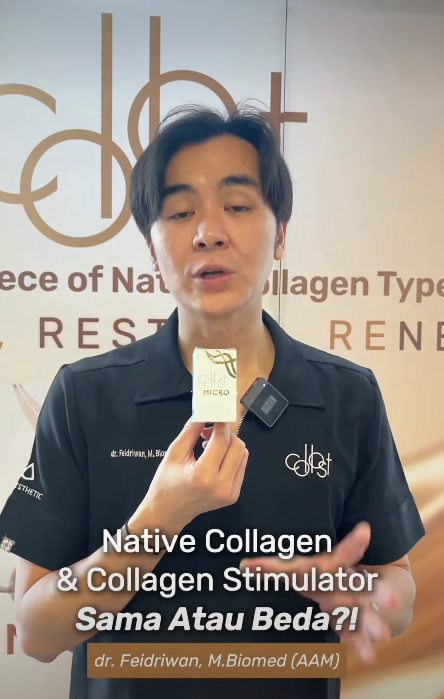
Is Native Collagen the Same as a Collagen Stimulator?
According to dr. Feidriwan, native collagen and collagen stimulators are not the same treatment. Although both are related to collagen, they differ in how they work and the outcomes they are designed to achieve.
During the interview, he emphasized that native collagen does not overlap with the functions of growth factors, skin boosters, or collagen stimulators. Rather than replacing these treatments, native collagen serves a unique role in supporting the overall health of the skin.
This distinction is important because many people assume that all injectable collagen-based treatments function in the same way. In reality, each procedure is designed to address different aspects of skin aging and regeneration based on the patient’s individual needs.
What Is the Role of Native Collagen?
Dr. Feidriwan explained that the primary role of native collagen is to create a healthier environment within the skin.
Collagen is the body’s main structural protein, responsible for maintaining the skin’s firmness, elasticity, and overall integrity. As natural collagen levels decline with age, the skin gradually loses its strength and resilience, leading to wrinkles, sagging, and changes in texture.
According to the interview, native collagen works by supporting the dermis and helping maintain a healthier tissue environment, allowing the skin to perform its natural regenerative processes more effectively.
This concept is known as collagen replacement, where collagen with a structure similar to the body’s own collagen is introduced to function as a biological scaffold within the dermis. By strengthening the skin’s structural foundation, native collagen helps create conditions that are more favorable for long-term skin regeneration.
Why Can Native Collagen Support Other Treatments?
One of the key points highlighted by dr. Feidriwan is that native collagen can actually enhance the effectiveness of other aesthetic treatments.
He explained that when the skin’s internal environment is healthier, it is better able to respond to treatments such as growth factors, skin boosters, and collagen stimulators.
An easy way to understand this is to think of the dermis as the foundation of a building. Native collagen helps reinforce that foundation. Once the structural environment becomes healthier, other treatments can perform their intended functions more effectively within better-quality tissue.
For this reason, native collagen should not be viewed as competition to other regenerative procedures, but rather as part of a comprehensive treatment strategy that works alongside them.
How Does Native Collagen Differ from Collagen Stimulators?
According to dr. Feidriwan, the most significant difference lies in how each treatment works.
He explained that collagen stimulators create a controlled inflammatory response within the skin. This temporary response activates fibroblasts, which refers to the cells responsible for producing collagen. This process will gradually lead to new collagen formation.
Collagen stimulators such as products containing poly-L-lactic acid (PLLA), calcium hydroxylapatite (CaHA), and polycaprolactone (PCL) also rely on the body’s natural biological response to stimulate collagen production over time. Because this process takes time, visible improvements generally appear several weeks or even months after treatment.
Native collagen, however, works differently. As explained by dr. Feidriwan, it does not induce inflammation as part of its mechanism of action. Instead, it directly supports the dermal environment, helping improve the skin’s structural foundation without first triggering an inflammatory response.
Is Native Collagen Safer?
During the interview, dr. Feidriwan noted that because native collagen does not rely on inflammation, it may offer a more favorable safety profile compared with treatments whose mechanism depends on inducing an inflammatory response.
However, he also stressed that this does not mean native collagen should replace collagen stimulators. Both treatments have different indications, objectives, and biological mechanisms.
The choice between them should always be based on the patient’s skin condition, clinical assessment, and overall treatment goals as determined by a qualified physician.
Can Native Collagen Be Combined with Collagen Stimulators?
Based on dr. Feidriwan’s explanation, native collagen does not conflict with collagen stimulators or other regenerative procedures. Since each treatment works through a different biological pathway, they can be incorporated into a personalized treatment plan when appropriate.
In clinical practice, physicians evaluate factors such as the patient’s age, skin quality, degree of aging, and desired outcomes before recommending the most suitable combination of treatments. This individualized approach allows each procedure to contribute according to its specific mechanism, often producing more comprehensive results than relying on a single treatment alone.
Read More:
- https://pyfaesthetic.com/collagen-therapy-for-chronic-eczema-exploring-the-potential-of-collost-in-skin-regeneration/
- https://pyfaesthetic.com/neck-skin-rejuvenation-with-collagen-how-collost-supports-youthful-neck-skin/
- https://pyfaesthetic.com/how-does-native-collagen-treatment-work-in-comparison-with-other-collagen-treatments/
Conclusion
According to dr. Feidriwan, M.Biomed (AAM), native collagen and collagen stimulators are two distinct treatments rather than interchangeable options. Native collagen helps create a healthier dermal environment that supports natural skin regeneration and may optimize the skin’s response to treatments such as growth factors, skin boosters, and collagen stimulators. Meanwhile, collagen stimulators encourage new collagen production through a controlled biological response involving inflammation. Understanding how these treatments differ allows patients and physicians to develop a treatment strategy that best matches individual skin conditions and aesthetic goals.
Sources:
- https://www.instagram.com/reels/DZR9qqzzLiu.
- https://www.novuskin.com/collagen-stimulator-injections-guide.
- https://www.ucsfhealth.org/care/treatments/collagen-replacement.