Cart 0

Collagen Replacement – As we age, our body’s natural collagen production gradually declines. Collagen is the primary structural protein responsible for maintaining the skin’s firmness, elasticity, and overall support. As collagen levels decrease, visible signs of aging begin to appear, including fine lines, wrinkles, skin laxity, and volume loss in certain areas of the face. External factors such as sun exposure, pollution, smoking, and unhealthy lifestyle habits can accelerate this process, causing collagen to break down even faster.
Today, there are many aesthetic treatments designed to address these concerns. One approach that has gained increasing attention is collagen replacement therapy. Unlike treatments that simply restore lost volume temporarily, collagen replacement focuses on replenishing depleted collagen, helping improve skin quality from within while supporting its natural structure.
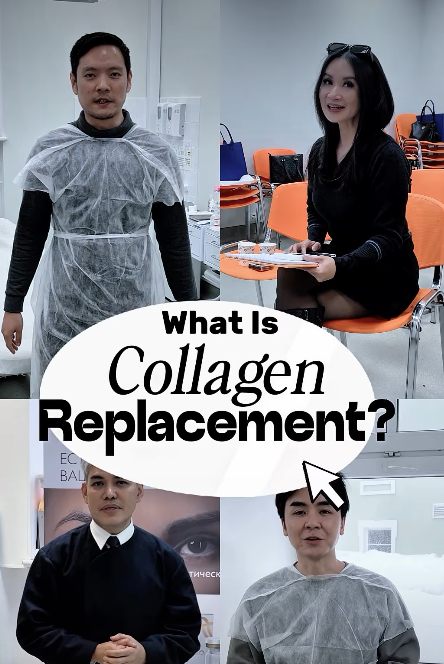
The Pyfaesthetic team recently talked with dr. Stanley Setiawan, Sp.DVE, FINSDV, FAADV, dr. Mathelda Weni H., M.Kes (AAM), M.M, dr. Feidriawan, M.Biomed (AAM), and dr. Reeza Edward, Sp.DVE to discuss collagen replacement therapy and its role in modern aesthetic medicine (https://www.instagram.com/reels/DVfKqQNE8II/). Here’s what we learned.
What Is Collagen Replacement?
Collagen replacement is a minimally invasive aesthetic procedure that involves injecting purified collagen into the skin to replenish collagen that has naturally diminished over time. According to UCSF Health, collagen replacement can help soften wrinkles, improve the appearance of scars, and restore volume to areas of the face that have become hollow due to aging.
The collagen used in this procedure closely resembles human collagen, allowing it to integrate well with the surrounding tissue. Once injected, it provides structural support beneath the skin, creating a smoother and firmer appearance. Although improvements can often be seen immediately after treatment, collagen replacement is not permanent, and maintenance sessions are typically recommended to preserve the results.
Based on our discussion with the doctors, collagen replacement is best described as a regenerative treatment that works in harmony with the skin’s natural biology. Rather than simply masking visible signs of aging, the treatment supports the skin’s own repair mechanisms, helping rebuild the dermal foundation for healthier, more balanced-looking skin.
This regenerative philosophy combines scientific research with precise treatment techniques. The goal is not only aesthetic enhancement but also long-term improvement in overall skin quality by restoring the dermis in a physiological way.
Why Is Collagen Replacement Becoming More Popular?
The field of aesthetic medicine has evolved beyond treatments that only address surface imperfections. Today, many patients are looking for procedures that improve the skin itself rather than simply creating temporary cosmetic changes.
Collagen replacement reflects this shift. By restoring collagen within the dermis, which refers to the layer where collagen naturally resides, it helps strengthen the skin’s underlying support structure. As a result, the benefits go beyond reducing wrinkles. Patients may also notice firmer, more elastic, and healthier-looking skin over time.
Because it works alongside the body’s natural biological processes, collagen replacement has become an increasingly popular regenerative approach for improving skin quality from the inside out.
Benefits of Collagen Replacement
Collagen replacement offers several aesthetic benefits for individuals experiencing signs of aging or skin damage. It can help soften fine lines and wrinkles, improve the appearance of certain scars such as acne scars, and restore facial volume that has diminished with age.
The treatment is also commonly used to improve smile lines, forehead lines, crow’s feet around the eyes, and lip definition. By strengthening the skin’s internal structure rather than simply filling superficial wrinkles, collagen replacement aims to deliver natural-looking results that enhance the skin’s overall appearance.
Collost as a Native Collagen Replacement
One of the latest innovations in collagen replacement is Collost, a product made from native Type I collagen that is designed to support the skin’s natural regenerative process.
Unlike highly processed collagen products, Collost preserves its native biological structure. Once introduced into the skin, it acts as a temporary biological scaffold that supports the formation of new tissue while encouraging natural skin regeneration.
According to the product information, Collost works through three complementary mechanisms. The intact collagen fibers provide structural support for the skin, collagen peptides stimulate the body’s own collagen production, and amino acids supply essential building blocks needed during tissue regeneration.
Collost also incorporates PoliONICoL® technology, which helps improve tissue hydration by enhancing the skin’s ability to retain moisture. In addition, its MicronONIC® technology produces biomimetic collagen particles that closely resemble the skin’s natural collagen structure, helping support new collagen formation more effectively.
What Happens During a Collagen Replacement Procedure?
Before treatment, patients undergo a consultation with their physician to assess their skin condition, medical history, and treatment goals.
A skin test is also an important step before collagen injection. This involves injecting a small amount of collagen into the skin to ensure there is no allergic reaction, particularly because some collagen products are derived from bovine collagen.
If no allergic response occurs, the treatment can proceed. The injection session typically takes between 30 and 60 minutes and is usually performed with local anesthesia to minimize discomfort and improve the patient’s overall experience.
How Long Do the Results Last?
One advantage of collagen replacement is that patients often notice an immediate improvement after treatment because the injected collagen instantly provides structural support beneath the skin.
However, like the body’s natural collagen, injected collagen gradually breaks down over time. For this reason, maintenance treatments are generally recommended every three to six months to preserve the results.
For treatments using the Collost product line, improvements in skin quality often begin to appear within the first few days after the procedure. To achieve optimal results, physicians typically recommend a series of treatment sessions spaced approximately two to three weeks apart, depending on each patient’s individual skin condition and treatment objectives.
Read More:
- https://pyfaesthetic.com/all-about-collost-the-masterpiece-of-native-collagen-type-i/
- https://pyfaesthetic.com/collost-micro-the-secret-behind-radiant-skin/
Conclusion
Collagen replacement is an innovative aesthetic treatment designed to restore collagen lost through the natural aging process, helping improve skin quality from within. Beyond reducing wrinkles and restoring facial volume, this regenerative approach strengthens the skin’s underlying structure, resulting in healthier, firmer, and more youthful-looking skin.
One of the newest advancements in this field is Collost, which utilizes native Type I collagen to support the skin’s natural regeneration process. Whether you’re looking to improve acne scars, address early signs of aging, or maintain healthier skin over time, Collost offers a regenerative treatment option focused on rebuilding the skin’s foundation rather than simply masking its imperfections.
Collost treatment is an excellent option for anyone looking to improve the appearance of scars, help prevent the early signs of aging, and maintain healthy, youthful-looking skin. Experience the benefits of Collost by Pyfaesthetic today!
Sources:
- https://www.ucsfhealth.org/care/treatments/collagen-replacement.
- https://www.instagram.com/reels/DVfKqQNE8II.
- https://collost.global/products/collost-micro.